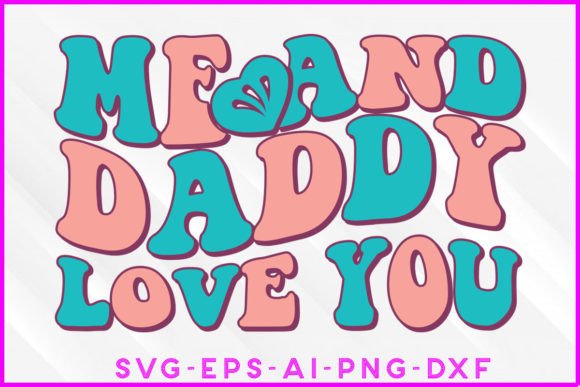
Me and Daddy Love You Valentine Design Review
As a designer who has spent years turning digital files into tangible, stitched treasures, I approach every new embroidery file with a mix of excitement and skepticism. There is a distinct difference between a design that looks good on a screen and one that holds up under the tension of an embroidery machine needle. Today, I am putting Me and Daddy Love You Design through its paces to see if it belongs in your next embroidery project or sits idle in your library.
The first impression of this piece is undeniably warm. The layout immediately suggests intimacy and family connection, making it a natural fit for the Crafts category. When you look at the visual personality of Me and Daddy Love You Valentine Design, it feels less like a generic holiday graphic and more like a heartfelt message meant to be worn or displayed. The mood is soft, nostalgic, and perfect for creating personalized gift items that carry genuine emotional weight. It does not scream for attention; instead, it invites a closer look, which is exactly what makes for a high-quality finished product.
Real-World Application: The Custom Baby Sweater Scenario
To truly understand how this design performs, I imagined placing it on a real-world item rather than just viewing a mockup. Let us say I am preparing a custom order for a boutique baby shop. The client wants a sweet, unisex sweater for a toddler's first Valentine's Day. This is where Me and Daddy Love You Valentine Design shines. The text-centric nature of the design works beautifully on the chest area of a sweatshirt or the front pocket of a onesie.
When I visualize the stitching process, the design seems to rely heavily on clean lines and readable lettering. In a scenario involving custom apparel, the clarity of the font is critical. If the letters are too thin or the spacing too tight, they might merge together during the stitching phase, especially on stretchy knit fabrics common in baby clothes. However, assuming the stitch density is balanced, this design would translate into a crisp, professional-looking handmade product. Customers buying from small shops expect a level of detail that mass-produced items lack, and this design has the potential to deliver that premium feel.
Furthermore, consider the versatility of this asset. Beyond clothing, imagine using Me and Daddy Love You Valentine Design on a canvas tote bag for a local craft fair. The sturdy fabric of a tote allows for slightly higher stitch density without puckering, making the design pop. It could also serve as a charming accent on a kitchen towel or a pillow cover for a nursery. The ability to adapt this single digital embroidery file across multiple categories—apparel, home decor, and accessories—is a key factor in its value for any Etsy seller or small business owner.
Where Caution Is Required
While the concept is strong, practical application requires careful consideration of material limitations. Not every surface is suitable for every design. If you plan to use this on a structured cap or a curved hat, you must evaluate the hoop size and the curvature of the garment. A design that is perfectly legible on a flat panel may distort when wrapped around the dome of a baseball cap. For such projects, testing on scrap fabric is non-negotiable.
Texture also plays a significant role. Embroidery on textured fabrics like terry cloth or heavy fleece can sometimes obscure fine details. If Me and Daddy Love You Valentine Design includes tiny decorative accents or very thin strokes, these elements might get lost in the nap of a plush blanket or a bathrobe. Similarly, on dark fabrics, thread color contrast becomes paramount. Without the right background thread or stabilizer choices, the design could lose its definition, reducing the overall visual appeal of the final piece.
I would also advise caution when attempting this on stretchy materials like jersey or spandex blends without proper stabilization. Stretchy fabrics can cause the stitches to pull and warp, leading to a messy finish that detracts from the professionalism of the work. If the goal is a durable item that withstands frequent washing, such as a child's daily wear, ensuring the stitch density is appropriate for the fabric weight is essential to prevent tearing or fraying over time.
Design Quality and Customer Perception
In the world of handmade goods, the perception of quality often hinges on the smallest details. A well-executed embroidered patch or a neatly stitched logo builds trust. When a customer receives a gift featuring Me and Daddy Love You Valentine Design, they are not just receiving a piece of fabric; they are receiving a sentiment. The way the design translates from screen to thread directly impacts that emotional connection.
If the design features a mix of satin stitch for outlines and fill stitch for blocks of text, it should offer a nice texture contrast. Satin stitches provide a smooth, shiny finish that stands out against the matte look of fill stitches. This combination adds depth and dimension, making the design feel more expensive and carefully crafted. Conversely, if the design relies too much on running stitch for large areas, it might appear sparse and less substantial on thicker garments.
For those selling finished items, the consistency of the design is vital for brand identity. Using a cohesive aesthetic across your commercial embroidery line helps customers recognize your work. A design like this, with its clear and affectionate message, fits well within a brand focused on family, holidays, or sentimental gifting. It supports a narrative of care and attention to detail, which are highly valued traits in the craft business.
Practical Notes for the Designer
Before committing to a full production run or a personal gift, there are several technical steps you must take. First, always test the design on a scrap piece of the actual fabric you intend to use. This allows you to check for puckering, thread breaks, or misalignment. Second, review the thread colors in your hooping setup. Sometimes a color that looks vibrant on a monitor appears dull in thread form due to fiber content differences.
Check the hoop size requirements carefully. If the design is larger than your machine's standard hoop, you may need to split the embroidery or use a multi-needle system, which adds complexity. Inspect small details closely; tiny dots or thin curves often require higher resolution to stitch cleanly. It is also wise to test the design in black and white mockups to ensure the composition balances well regardless of color variations.
Finally, confirm your licensing terms. Many digital embroidery files come with restrictions on commercial use. If you plan to sell the finished products, ensure you have the rights to do so. Some licenses allow for a limited number of units, while others require a separate commercial agreement. Ignoring these terms can lead to legal issues down the line.
In conclusion, Me and Daddy Love You Valentine Design offers a solid foundation for creating meaningful, high-value items. Its strength lies in its emotional resonance and adaptability across various embroidery project types. By paying close attention to fabric choice, stabilization, and technical execution, you can transform this digital asset into a stunning finished product that delights recipients and strengthens your brand reputation. Whether for a personal keepsake or a boutique product line, this design has the potential to be a standout piece in your collection.